Resources
Videos
Videos
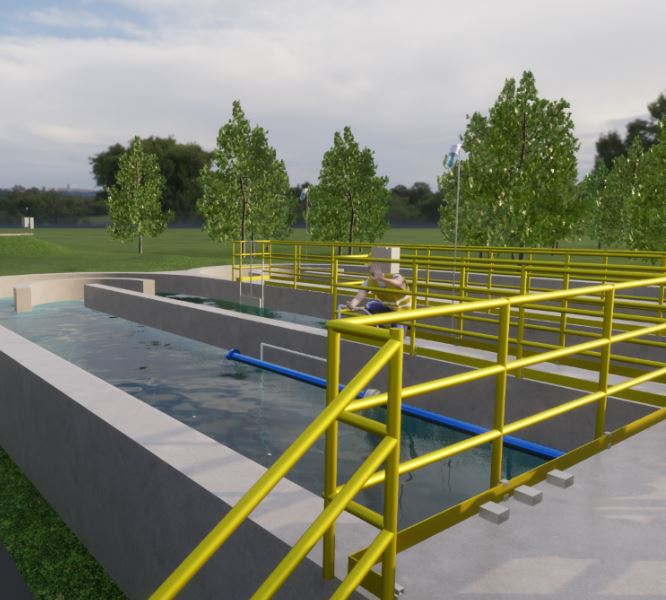
Revit Video Flythrough: Wastewater Treatment Plant
Take a ride on our flythrough tour of a local wastewater treatment plant pre-construction, created with Revit technology.
...
Read More
Training
Lead Service Line Replacements – Getting the Lead Out
This video series highlights the step-by-step process of lead service line replacements in Indiana and Ohio....
Learn More
Videos
Tunnel Vision: Sewer Camera Services
Trekking through your sewer system doesn't have to be a difficult task. The Rovver X camera provides you with eyes underground, giving you the ability to see sanitary collection systems in real time and help identify problem areas easier than ever.
...
Read More
Videos
The New Lead and Copper Rule
Kurt Wanninger, MBA and Senior Project Manager in the Drinking Water group at Wessler, has more than 30 years of professional experience in the water, wastewater and stormwater utility industry as well as more than 16 years in municipal government. In this webinar, Kurt, in conjunction with Jeff Rowe, Partner at Baker Tilly, discusses information on the new Lead and Copper Rule (LCR) requirements that have been published by the Environmental Protection Agency (EPA). These new LCR changes will have significant impact on communities that have lead service lines within their drinking water system. Some of the hurdles they cover include:
-
communities will need to inventory their service line materials
-
community water systems will need to increase the quantity of lead and copper sampling
-
communities will need to develop a lead service line replacement plan
-
lastly, these new LCR changes may significantly burden a community financially.
Read More
![[MS4 Training] New MS4 General Permit Plan Review Requirements](https://www.wesslerengineering.com/wp-content/uploads/2021/03/MS4-General-Permit-Plan-Review-Requirements-Training.jpg)
Videos
[MS4 Training] New MS4 General Permit Plan Review Requirements
In this webinar, Environmental Services Project Manager Nancy Cho discusses the upcoming new construction stormwater and MS4 draft general permits. The new permits mean significant changes to the plan review process for new development and redevelopment, including:
- stormwater pollution prevention plans (SWPPPs) will need to include additional information
- MS4s will need to update their ordinances and standards
- new post-construction requirements will require additional technical review of stormwater quantity and quality
Read More
Videos
Wessler 45th Anniversary Company Timeline
To celebrate our 45th anniversary, our team created a video timeline of our journey through the past 45 years in business.
View the video above to take stroll through our company's history and celebrate 45 great years!
...Read More
Videos
MS4 Training – Identifying Wetlands for Project Planning and Plan Review
In this webinar, Environmental Services Project Manager Nancy Cho discusses how wetlands perform ecologically, as well as how they perform flood prevention and stormwater quality functions. Impacts to wetlands are regulated by federal, state and local regulations. This webinar will help MS4s understand the process of identifying wetlands, avoiding impacts during maintenance activities and permitting wetland impacts for public projects. This session also will help MS4s identify potential wetlands during Rule 5 and drainage plan reviews.
For more information or if you have any questions, please contact Nancy Cho at NancyC@wesslerengineering.com or by phone at 317-788-4551....
Read More
Videos
How to Improve Your Community’s Public Protection Classification
How to improve your public protection classification & lower insurance rates.
Senior Project Manager at Wessler, Stan Diamond has helped numerous communities develop hydraulic models of their water distribution systems and then has used those models to help them identify and prioritize needed improvements. Early on, a colleague gave Stan an Insurance Services Office's (ISO) hydrant flow test report and suggested he use the test results to validate the performance of a hydraulic model.
Stan found that not only was the ISO's information useful for validating the model, but it was also useful for identifying the water distribution system deficiencies. After learning more about how the ISO uses their hydrant flow test results and other factors to establish our community's Public Protection Classifications, and getting a better understanding of the impact that those classifications have on insurance rates, Stan has become passionate about educating others on what they can do to improve their water distribution systems, raise their community's public protection classifications, and bring down their insurance rates....
Read More
Videos
Replacement or Rehabilitation?
A summary of sanitary sewer replacement and rehabilitation alternatives and technologies, as well as the evaluation of several scenarios that compare the economics of replacement costs to the costs of rehabilitation.
In this webinar, Senior Project Manager Ryan Brauen, P.E., provides a summary of sanitary sewer replacement and rehabilitation alternatives and technologies. He evaluates several scenarios to compare the economics of replacement costs compared to rehabilitation costs. Ryan's goal was for listeners to leave this presentation with a better understanding of sanitary sewer replacement and rehabilitation alternatives, ancillary cost considerations, and have a better understanding of improvement options when evaluating future repair work in their collection systems....
Read More
Videos
GHS of Classification
Reviews the new labeling and SDS requirements of OSHA.
GHS Webinar- The webinar reviews the new labeling and SDS requirements of OSHA’s Hazard Communication Program.
If your employees frequently handle chemicals or are around chemicals at sites or plants, they will need training on the new Global Harmonization System (GHS) requirements for labeling and Safety Data Sheets (SDS).
Do you or your employees need to be trained? Let Wessler help! The webinar reviews the new labeling and SDS requirements of OSHA’s Hazard Communication Program.
The websites referenced during the webinar:
Supplemental Information
OSHA’s Hazard Communication
University of Nebraska
Fish Consumption Advisory...
Read More
Videos
Avoiding the Emergency Room
Engineer Nick Lyons discusses the daunting tasks of managing and maintaining a sewer system. However, like our own human health, a structured plan for preventative care is simpler and often less expensive than a trip to the emergency room. This presentation describes the steps of forming an asset management plan (AMP) to promote the health and longevity of a sewer system and reduce long-term costs. These steps include performing “check-ups” to investigate a sewer system’s condition, assessing the system’s “medical history” to prioritize maintenance and repairing and rehabilitating sewer systems when required.
...
Read More
Videos
6 Steps to Performing a Smoke Test
The theory behind smoke testing is: where smoke's getting out, water is getting in.
In this video, Wessler Engineering is on site smoke testing a sanitary sewer system to locate and identify defects that are contributing to inflow infiltration. The theory behind smoke testing is: where smoke's getting out, water is getting in. Visit here to read about the 6 Steps!...
Read More
Videos
Intro to SCADA – Basic Component Functions and Architecture
Information on what SCADA is, as well as its functions and components.
Shawn Perkins, P.E. and Senior Project Manager in the Electrical Group at Wessler, specializes in Instrumentation & Controls, SCADA design, and implementation. In this webinar, Shawn discusses information on SCADA systems (Supervisory Control and Data Acquisition). You will find out why SCADA is known as "mission control" by learning about the benefits of SCADA, how it interacts with control systems to regulate processes, what makes up the components of a PLC/HMI system, and how all of these components work together to create a more unified control system. You will also gain a better understanding of the equipment, hardware, software and industry terminology used with SCADA....
Read More
Videos
MS4 Training – Pollution Prevention & Good Housekeeping Part II
Pollution Prevention and Good Housekeeping Part II: A virtual Municipal Facility Inspection- We took participants step-by-step through a real municipal facility inspection. Participants learned how to identify and document deficiencies, as well as recommend corrective actions.
We held a "virtual inspection" webinar last week and were thrilled with the level of participation. In the webinar, we took participants step-by-step through a real municipal facility inspection. Participants learned how to identify and document deficiencies, as well as recommend corrective actions.
The webinar satisfies one program requirement just by participating (annual Municipal Employee Training). If you missed the live event, we have posted the recording below for you to watch at your convenience. Don't forget to download this blank checklist with completed examples to aid in your training and evaluation process....
Read More
Videos
MS4 Training – For Construction and Post Construction MCMs 4 and 5
Are You Prepared for Inspections and Enforcement?
This training webinar will help you prepare for SWPPP inspections of active construction sites, inspection of post-construction BMPs, and enforcement actions that might be associated with those inspections....
Read More
Videos
Oil, Chemical & Waste Handling
Training for municipal employees for handling of management of used oils, chemicals, universal and electronic wastes. During this webinar the following topics will be discussed:
- Used oil collection and handling
- General chemical handling and storage practices
- Spill prevention
- Universal Waste
- Electronic Waste
Read More
Videos
Wellhead Protection Training for Utility Employees
This webinar reviews information such as securing the wells, preventing spills from happening around the wells, and responding to spills or contamination should they occur within the wellhead protection area or distribution system.
If your community has a Wellhead Protection Plan to protect the wells and drinking water source, your utility employees are required to have periodic training. Think about where your wells are located and who is working around those wells -- employees from the water utility, parks department and street department? Do these employees need to be trained?
Let Wessler Engineering help! We presented a webinar (recording below) on Wellhead Protection Training for Utility Employees, and many attendees asked us to make this available for others. The webinar reviews information such as securing the wells, preventing spills from happening around the wells, and responding to spills or contamination should they occur within the wellhead protection area or distribution system.
During the live webinar, there were questions about how to regulate activities in the wellhead protection area. The Indiana Department of Environmental Management's website (Additional Wellhead Protection Provisions in Other Rules) has a listing of regulations, other than the wellhead protection rule, that are in place....
Read More
Videos
MS4 Training – Illicit Discharge Detection & Elimination Webinar
The purpose of this webinar is to identify and provide examples of commonly encountered illicit discharges, discuss various methods and means available to assist with the elimination of illicit discharges, and to provide guidance for IDDE program compliance documentation. Wessler has developed an IDDE Field Guide to assist MS4 personnel with illicit discharge identification, elimination, and documentation. This field guide is available for download here.
The webinar will provide viewers an opportunity to fulfill their annual MS4 training requirement....
Read More
Videos
MS4 Training – Implementing Your MS4 Program During Winter Weather Months
Jacob Barker is an assistant project manager in our Environmental Services Group. Viewers will receive training on a variety of topics concerning the implementation of the MS4 Program during winter weather months, spanning all six Minimum Control Measures. The webinar will provide viewers an opportunity to fulfill their annual MS4 training requirement....
Read More
Videos
Cost Savings at the WWTP
In this webinar, Project Engineer Bridget Philpott discusses how a utility's power bill is calculated and the operational changes possible at a treatment plant to reduce the bill.
For more information or if you have any questions, please contact Bridget Philpott at BridgetP@wesslerengineering.com or by phone at 317-788-4551....
Read More
Videos
Case Study: City of Lawrence’s Capital Improvements Planning
Using the City of Lawrence's water system as a case study, Senior Project Manager Dylan Lambermont, PE, LEED AP, explores the areas of: asset management, risk assessments, aging infrastructure, water main replacement program, capacity challenges, funding, design and construction.
For more information or if you have any questions, please contact Senior Project Manager Dylan Lambermont, PE, LEED AP at DylanL@wesslerengineering.com or by phone at 317-788-4551....
Read More
Videos
CSO LTCP Cost Savings Through Green Infrastructure
In this webinar Wessler Engineering's Stormwater group head, Bill Leber, P.E., LEED AP discusses the how green infrastructure can be implemented to slow the rate of runoff, resulting in pipe, storage and treatment facility size reduction, even in areas where soils do not support infiltration....
Read More
Videos
LiDAR and Its Applications
Over the past few years, light detection and ranging (LiDAR) has become more relevant to municipalities. In 2013 the State of Indiana completed a two-year LiDAR survey of the entire State, making elevation data accessible to the public for the first time.
Previously, LiDAR data had been used for specific applications due to the accuracy of the data. Over time, advancements in technology and increased accuracy of the data has expanded LiDAR’s application and has been proven beneficial to municipalities.
This webinar was presented on October 14 by Ryan Sidler....
Read More
Videos
Drone-Assisted Stormwater Site Inspections
Check out Wessler Engineering Environmental Services Project Manager Jacob Barker’s experience with drone technology to assist with construction site stormwater erosion and sediment control inspections. From providing greater access to construction sites, to capturing high resolution photos, to the potential for additional structure and marketing applications and much more, Jake offers his take on the pros and cons of this increasingly popular technology....
Read More
Videos
Water Loss Audit is Done…What can I do with the Information?
Andrew Gordon, P.E., a Project Manager in the Drinking Water Group at Wessler Engineering, discusses the importance of completing a water loss audit, understanding the terminology used in the audit, how to interpret your audit results, and determine ways to reduce non-revenue water in your water system.
Read More
Videos
Reducing Inflow & Infiltration in a Sanitary Collection System
In this Webinar Field Services Manager, Brad Robinson, and Project Engineer, Joe Bartos, discuss why it is important for communities to identify inflow and infiltration, ways municipalities and/ or utilities can identify areas of inflow and infiltration (I/I), and rehabilitation options of Sanitary Collection System to reduce or eliminate I/I....
Read More
Videos
Alternate Sewer Rehab Methods: EXpanding the Toolbox
Wessler Engineering's Kate Hughes, E.I., presents a Citizens Energy Group pilot study using Miller Pipeline’s Expanded in Place sewer rehab method. Kate compares this method to the popular Cured In Place Pipe method - known as CIPP - and also discusses the benefits and limitations of each....
Read More
Videos
Asset Management for Capital Planning
Learn about available tools to complete an asset management evaluation and how the results can be used in capital planning....
Read More
Videos
How to Improve Your Community’s Public Protection Classification
How to Improve Your Community's Public Protection Classification:
Senior Project Manager at Wessler, Stan Diamond has helped numerous communities develop hydraulic models of their water distribution systems and then has used those models to help them identify and prioritize needed improvements. Early on, a colleague gave Stan an Insurance Services Office's (ISO) hydrant flow test report and suggested he use the test results to validate the performance of a hydraulic model. Stan found that not only was the ISO's information useful for validating the model, but it was also useful for identifying the water distribution system deficiencies. After learning more about how the ISO uses their hydrant flow test results and other factors to establish our community's Public Protection Classifications, and getting a better understanding of the impact that those classifications have on insurance rates, Stan has become passionate about educating others on what they can do to improve their water distribution systems, raise their community's public protection classifications, and bring down their insurance rates.
Read More
Videos
MS4 Training – Pollution Prevention & Good Housekeeping Part I
MS4 Good Housekeeping Do’s and Don’t’s- focus on municipal facility general good housekeeping and pollution prevention as it pertains to the Municipal Separate Storm Sewer System (MS4) Program – Minimum Control Measure (MCM) #6.
The training event will focus on municipal facility general good housekeeping and pollution prevention as it pertains to the Municipal Separate Storm Sewer System (MS4) Program – Minimum Control Measure (MCM) #6.
MS4 communities are required to document employee training on topics such as chemical handling practices, fueling operations, spill prevention, vehicle maintenance and other general good housekeeping practices. This webinar will serve as that required training....
Read More